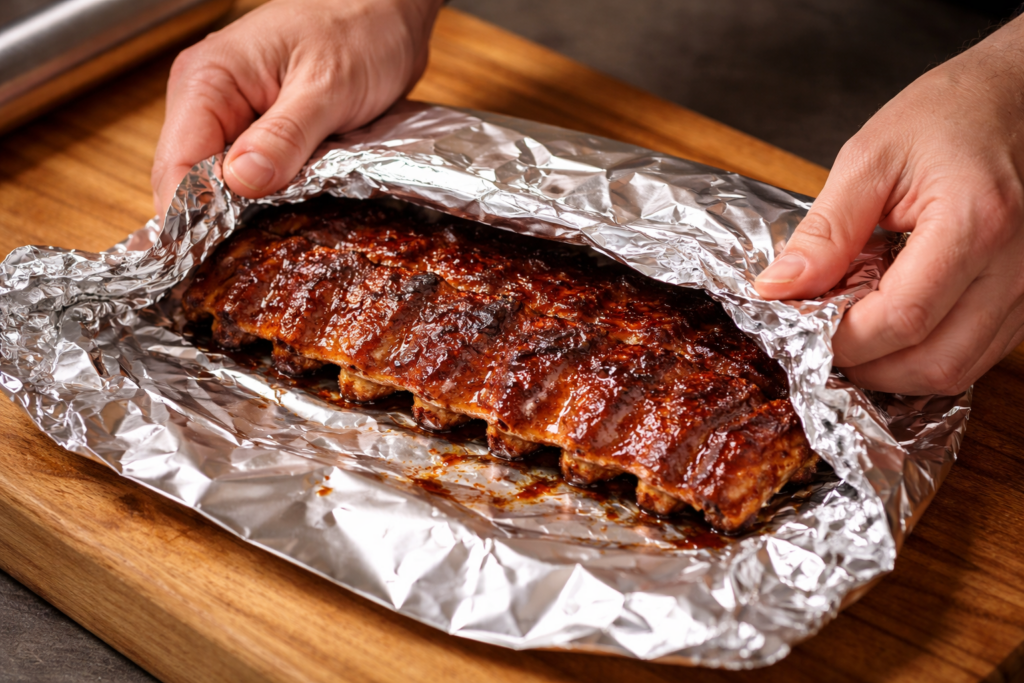
Wrapping ribs is one of the most debated topics in barbecue. Some pitmasters swear by wrapping ribs in foil to make them tender faster, while others prefer leaving ribs unwrapped to build a better bark.
So should you wrap ribs when smoking? The short answer is: wrapping ribs is optional, but it can help ribs cook faster and become more tender. However, unwrapped ribs usually develop a firmer bark and stronger smoke flavor.
In this guide, we’ll break down exactly when to wrap ribs, what to wrap them in, and how wrapping affects tenderness, bark, and cook time.
Quick Answer: Should You Wrap Ribs?
Yes, you should wrap ribs if you want:
- Faster cook time
- More tender ribs
- More moisture retention
No, you should NOT wrap ribs if you want:
- Better bark
- Stronger smoke flavor
- Less “steamed” texture
Many people wrap ribs during the last half of the cook, especially when using the 3-2-1 ribs method.
👉 Full guide: 3-2-1 ribs method
What Does Wrapping Ribs Do?
Wrapping ribs traps heat and moisture, creating a steaming effect. This helps break down collagen and connective tissue faster, which is why wrapped ribs often become more tender sooner.
Wrapping ribs can help prevent:
- Dry ribs
- Tough texture
- Over-smoking bitterness
But the downside is that wrapping can soften bark and reduce crispness.
When Should You Wrap Ribs?
Most pitmasters wrap ribs when:
- The bark has formed
- The ribs have taken on a deep reddish-brown color
- The meat has started pulling back from the bones slightly
This typically happens around:
⏱ 2 to 3 hours into the cook
Exact timing depends on your smoker temperature.
👉 See our time guides:
Best Temperature for Smoking Wrapped Ribs
Wrapping works best when smoking ribs between:
- 225°F
- 250°F
If you’re deciding between temperatures, check out:
👉 what temperature to smoke ribs (225 vs 250)
What to Wrap Ribs In (Foil vs Butcher Paper)
Foil (Most Common Option)
Foil traps the most moisture and heat, making ribs cook faster.
Foil is best for:
- fall-off-the-bone ribs
- very tender texture
- speeding up cooking time
Downside:
Foil can soften bark and create a steamed texture.
Butcher Paper (Better Bark Option)
Butcher paper breathes more than foil, so ribs stay tender but bark holds up better.
Butcher paper is best for:
- better bark
- more smoke flavor
- slightly less steaming
Downside:
Does not speed up cooking as much as foil.
No Wrap (Best for Bark and Smoke Flavor)
Leaving ribs unwrapped is a great option if you want a firm bark and deep smoke flavor.
No wrap is best for:
- strong bark
- traditional smoked texture
- less “fall apart” ribs
Downside:
Takes longer and ribs can dry out if you’re not careful.
How Long to Wrap Ribs
Most ribs are wrapped for:
⏱ 1 to 2 hours
Common wrapping times:
- 225°F wrap time: 2 hours
- 250°F wrap time: 1 to 1.5 hours
If you wrap too long, ribs can become mushy.
What to Put in the Foil When Wrapping Ribs
Many people add a small amount of liquid or seasoning when wrapping ribs.
Popular wrap ingredients include:
- brown sugar
- honey
- butter
- apple juice
- barbecue sauce
This creates a sweet, tender rib texture.
Tip: Don’t overdo the liquid. Too much will make ribs soggy.
Should You Wrap Baby Back Ribs?
Yes, wrapping baby back ribs is common because they are leaner and can dry out faster than spare ribs.
Wrapping baby backs helps:
- keep them juicy
- speed up tenderness
- prevent dry edges
Baby backs also cook faster than spare ribs, so wrapping time may be shorter.
Should You Wrap Spare Ribs?
Spare ribs have more fat and connective tissue, so wrapping can help them break down faster.
However, spare ribs can also handle long cooks unwrapped because they have more moisture naturally.
If you want firmer bark on spare ribs, you can delay wrapping or skip it entirely.
How to Tell When Ribs Are Ready After Wrapping
Even wrapped ribs should be cooked until tender.
Use these tests:
- bend test
- toothpick test
- internal temp range (195°F–203°F)
👉 Full guide: how to tell when ribs are done
Wrapping vs No Wrap: Which Is Better?
Wrapping Ribs (Pros)
- Faster cooking
- More tender ribs
- Less chance of dryness
Wrapping Ribs (Cons)
- Bark can soften
- Less smoke flavor
- Can become mushy if wrapped too long
No Wrap Ribs (Pros)
- Better bark
- More smoke flavor
- More traditional BBQ texture
No Wrap Ribs (Cons)
- Longer cook time
- Higher chance of drying out
- Requires more attention
Best Wood Pellets for Wrapped Ribs
When ribs are wrapped, smoke absorption slows down, so you want a strong but balanced pellet flavor early in the cook.
Great choices include:
- apple
- cherry
- pecan
- hickory (stronger option)
👉 Full guide: best wood pellets for ribs
Pro Tip: Use a Thermometer for Consistent Results
A thermometer makes it easier to monitor your smoker temperature and avoid overcooking.
👉 See our guide on best wireless meat thermometer for smoking
Frequently Asked Questions
Do ribs get more tender the longer you cook them?
Yes, but only up to a point. If cooked too long, ribs become mushy and dry.
Should you wrap ribs at 225°F?
Yes, wrapping at 225°F is common and usually done after 2.5–3 hours of smoking.
Should you wrap ribs at 250°F?
Yes, wrapping at 250°F works well, but wrapping time is usually shorter.
Is wrapping ribs necessary?
No. Wrapping is optional and depends on the bark and tenderness you want.
Final Thoughts
Wrapping ribs is a great technique if you want faster cooking times and more tender ribs. Foil produces the most fall-off-the-bone texture, while butcher paper helps preserve bark. If you prefer firmer bark and stronger smoke flavor, smoking ribs unwrapped is a great option.
No matter which method you choose, the key is cooking ribs until they are tender and properly done.