One of the most common mistakes when smoking brisket is relying on temperature alone.
So what internal temperature should brisket be?
Brisket is typically done between 195°F and 205°F — but true doneness is determined by tenderness, not just numbers.
Here’s how to know exactly when your brisket is ready.
What Internal Temperature Is Brisket Done?
Most briskets finish cooking in this range:
195°F–205°F internal temperature
However, temperature is only a guideline.
Every brisket is different. The real test is probe tenderness.
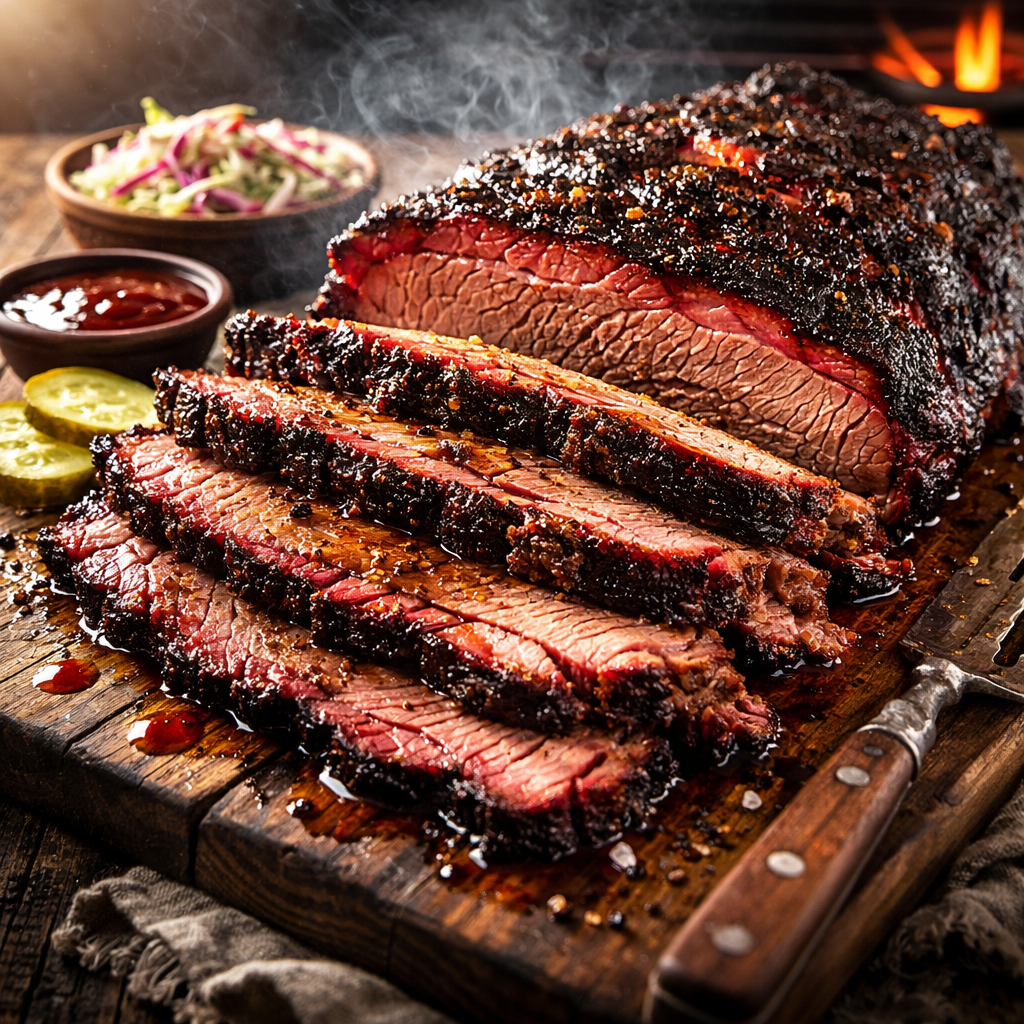
When you insert a thermometer or probe into the flat and it slides in with almost no resistance — like warm butter — your brisket is done.
Why Brisket Isn’t Done at 165°F
At around 165°F, brisket hits the stall.
This is when:
- Moisture evaporates from the surface
- Internal temperature stops rising
- Collagen hasn’t fully broken down yet
At this stage, the meat will still be tough.
Brisket becomes tender only after the connective tissue fully renders — which happens closer to 200°F.
Why 203°F Is Often Mentioned
Many pitmasters reference 203°F as the ideal finishing temperature.
Why?
Because that’s commonly where collagen has fully broken down in many briskets.
But remember:
Some briskets are tender at 198°F.
Some aren’t ready until 205°F.
The number is a range — not a rule.
How to Check for Probe Tenderness
Here’s how to test properly:
- Insert your thermometer into the thickest part of the flat.
- Push gently.
- It should slide in with little to no resistance.
If it feels tight or rubbery, keep cooking.
Check multiple spots. The flat is the best indicator since it dries out faster than the point.
Does Cooking Temperature Affect Internal Temp?
No.
Whether you cook at:
- 225°F
- 250°F
- Even 275°F
Your brisket will still finish in the same internal range.
If you’re using a pellet grill, understanding how it maintains temperature can help you cook more consistently.
If you’re unsure which cooking temp to use, see our breakdown of 225 vs 250 for brisket.
Cooking temperature affects timing — not final doneness temperature.
Longer cooks at lower temperatures will also use more pellets, which can increase fuel costs over time.
Should You Rest Brisket After It Hits 200°F?
Yes — and this step is critical.
Once your brisket reaches probe tenderness:
- Remove it from the smoker
- Let it rest at least 1 hour
- Ideally rest 2–4 hours in a cooler or warm oven
Resting allows juices to redistribute and improves tenderness dramatically.
Skipping the rest can ruin an otherwise perfect cook.
What Happens If You Pull Brisket Too Early?
If you remove brisket at:
- 185°F → It will be tough
- 190°F → Likely still chewy
- Before probe tenderness → Under-rendered
Internal fat and collagen need time to break down fully.
Patience is key.
Final Recommendation
If you want consistently tender brisket:
- Cook at 250°F
- Wrap around 165–175°F (optional but recommended)
- Start checking tenderness at 195°F
- Pull when probe tender (usually 195–205°F)
- Rest at least 1 hour
Don’t cook to a number.
Cook to tenderness.
Brisket Quick Answers
Is brisket done at 190°F?
Usually no. Most briskets are still tight at 190°F and need more time.
Can brisket be done at 198°F?
Yes. If it’s probe tender, it’s ready — even below 200°F.
What is the perfect internal temperature for brisket?
There isn’t one exact number. The ideal range is 195–205°F, but tenderness determines doneness.