
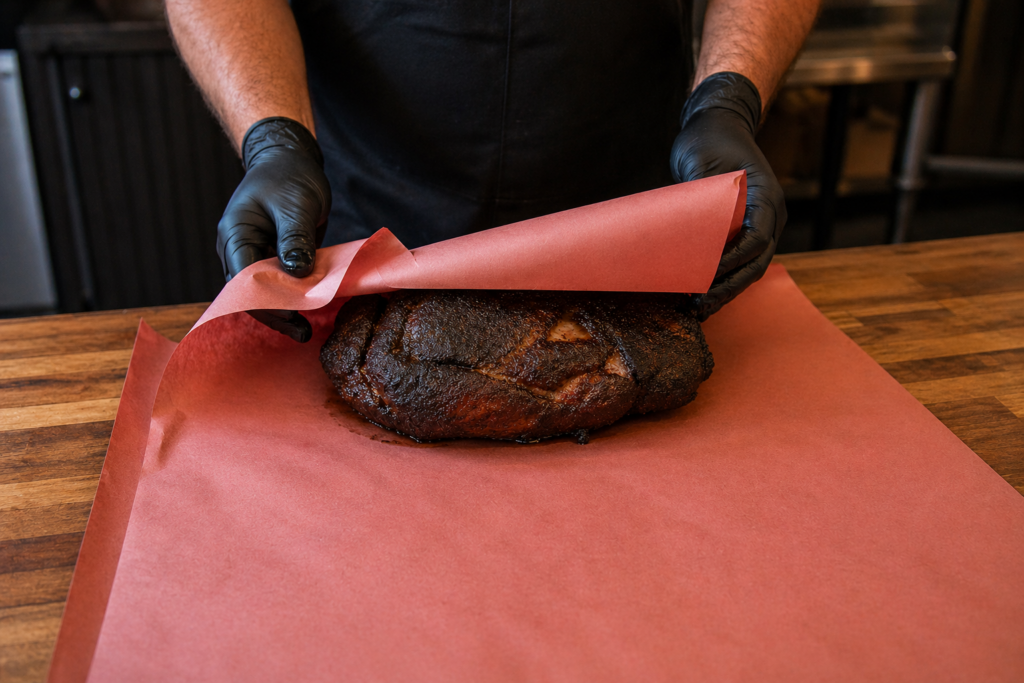
Wrapping pork shoulder is one of the best ways to speed up cooking time and prevent the meat from drying out. Many pitmasters wrap pork shoulder once it reaches the stall, while others prefer to leave it unwrapped for a stronger bark.
So should you wrap pork shoulder when smoking? The answer is: yes, wrapping is usually a good idea, especially if you want tender pulled pork faster. However, wrapping is optional and depends on the bark texture and cook time you want.
In this guide, we’ll cover when to wrap pork shoulder, what to wrap it in, and how wrapping affects tenderness, bark, and overall results.
Quick Answer: Should You Wrap Pork Shoulder?
Yes, you should wrap pork shoulder if you want:
- Faster cook time
- More tender pulled pork
- Less chance of dryness
- Easier stall management
No, you should NOT wrap pork shoulder if you want:
- Stronger bark
- More smoke flavor
- A darker crust
Wrapping is most commonly done during the stall.
👉 Full guide: Pork Shoulder Stall Explained
What Does Wrapping Pork Shoulder Do?
Wrapping traps heat and moisture, reducing evaporation from the meat surface. This helps pork shoulder cook faster and prevents it from drying out.
Wrapping also helps push through the stall, which usually happens around:
✅ 150°F–170°F internal temperature
Once wrapped, the pork shoulder temperature usually rises more quickly toward the finishing range.
When Should You Wrap Pork Shoulder?
Most pitmasters wrap pork shoulder when it reaches:
🔥 165°F to 175°F internal temperature
This is typically when:
- bark has formed
- the meat has darkened in color
- the stall begins
If you wrap too early, you may end up with soft bark and less smoke flavor.
Foil vs Butcher Paper for Pork Shoulder
Foil (Fastest Method)
Foil traps the most heat and moisture, which makes pork shoulder cook faster.
Foil is best for:
- faster cooks
- super tender pulled pork
- beginners who want consistent results
Downside:
Foil can soften bark and create a “steamed” texture.
Butcher Paper (Better Bark Option)
Butcher paper breathes more than foil. It still speeds up cooking, but it allows some airflow so bark stays firmer.
Butcher paper is best for:
- better bark texture
- more smoke flavor than foil
- traditional BBQ style
Downside:
It won’t cook as fast as foil.
No Wrap (Best Bark and Smoke Flavor)
Smoking pork shoulder unwrapped creates the best bark and strongest smoke flavor.
No wrap is best for:
- deep bark
- maximum smoke flavor
- BBQ traditionalists
Downside:
Cook time can increase by several hours, especially at 225°F.
How Long to Cook Pork Shoulder After Wrapping
After wrapping, pork shoulder typically takes another:
⏱ 2 to 5 hours
depending on size, smoker temperature, and how long it stalled.
You should continue cooking until the pork shoulder reaches:
✅ 195°F to 205°F internal temperature
Most pulled pork cooks aim for:
🔥 200°F–203°F
👉 Full guide: Pork Shoulder Internal Temperature
Does Wrapping Pork Shoulder Make It More Tender?
Yes. Wrapping helps pork shoulder become more tender by holding moisture and pushing the meat through the stall faster.
This allows collagen and connective tissue to break down more efficiently, resulting in easier shredding and juicier pulled pork.
Should You Wrap Pork Shoulder at 225°F?
Yes, wrapping is very common at 225°F because cook times are longer and the stall tends to last longer.
At 225°F, most people wrap around:
✅ 165°F internal temp
👉 See full cook times here: How Long to Smoke Pork Shoulder at 225
Should You Wrap Pork Shoulder at 250°F?
Yes, wrapping works great at 250°F too, but you may not need to wrap as long because the cook is already faster.
Many pitmasters smoke at 250°F unwrapped for longer, then wrap late to finish.
What to Put in the Wrap (Optional)
Unlike ribs, pork shoulder usually doesn’t need added ingredients when wrapped. However, some people add:
- apple juice
- apple cider vinegar
- brown sugar
- butter
These can add moisture and sweetness, but too much liquid can soften bark.
A small splash (1–2 tablespoons) is plenty.
Common Wrapping Mistakes
Wrapping too early
If you wrap before bark forms, you’ll end up with soft exterior texture.
Wrapping too long
Leaving pork shoulder wrapped too long can make the bark mushy.
Cooking by temperature only
Tenderness matters more than the number. Always probe for softness.
Best Way to Tell When Wrapped Pork Shoulder Is Done
The best signs pork shoulder is done:
- internal temp around 200°F–203°F
- probe slides in with no resistance
- bone pulls out clean (bone-in)
- meat feels soft and jiggles slightly
A thermometer makes this process much easier.
👉 See our guide on the best wireless meat thermometer for smoking
Best Wood Pellets for Smoking Pork Shoulder
Great pellet flavors for pork shoulder include:
- apple
- cherry
- pecan
- hickory
- oak
Fruit woods provide a sweeter flavor, while hickory adds classic BBQ depth.
👉 Full Guide: Best Wood Pellets for Smoking
Frequently Asked Questions
Should I wrap pork shoulder in foil or butcher paper?
Foil cooks faster and retains more moisture. Butcher paper preserves bark better and provides more traditional BBQ texture.
Do I have to wrap pork shoulder?
No. Wrapping is optional, but it can shorten cook time and improve tenderness.
Can I wrap pork shoulder at 160°F?
Yes. Many people wrap around 160°F–165°F, especially if the stall has started.
Does wrapping stop smoke flavor?
Wrapping greatly reduces smoke absorption, so it’s best to let bark form before wrapping.
Final Thoughts
Wrapping pork shoulder is one of the easiest ways to get tender pulled pork faster. Foil is best for speed and moisture, while butcher paper helps preserve bark and texture. If you have the time and want maximum bark, you can smoke pork shoulder without wrapping, but it will take longer.
For most backyard cooks, wrapping at 165°F–175°F is the best method for consistent results.