If you’re smoking brisket on a pellet grill, you’ve probably heard about “the stall” — and wrapping is how most pitmasters push through it.
So when should you wrap brisket on a pellet grill?
Wrap your brisket when it reaches 165°F–175°F internal temperature and the bark is set.
For a deeper look at finishing temperature and tenderness, see our brisket internal temperature guide.
Here’s exactly why that works and how to do it right.
Why Does Brisket Stall?
The stall happens when the brisket reaches around 150°F–170°F internal temperature.
At this stage:
- Moisture evaporates from the surface
- Evaporation cools the meat (like sweat cooling your skin)
- Internal temperature stops rising
This can last several hours.
On pellet grills — which produce consistent heat — the stall is very noticeable.
Wrapping helps push the brisket past this phase.
What Temperature Should You Wrap Brisket?
The ideal wrapping window is:
165°F–175°F internal temperature – See our list for the best meat thermometers for smoking!
But temperature alone isn’t enough.
Before wrapping, check that:
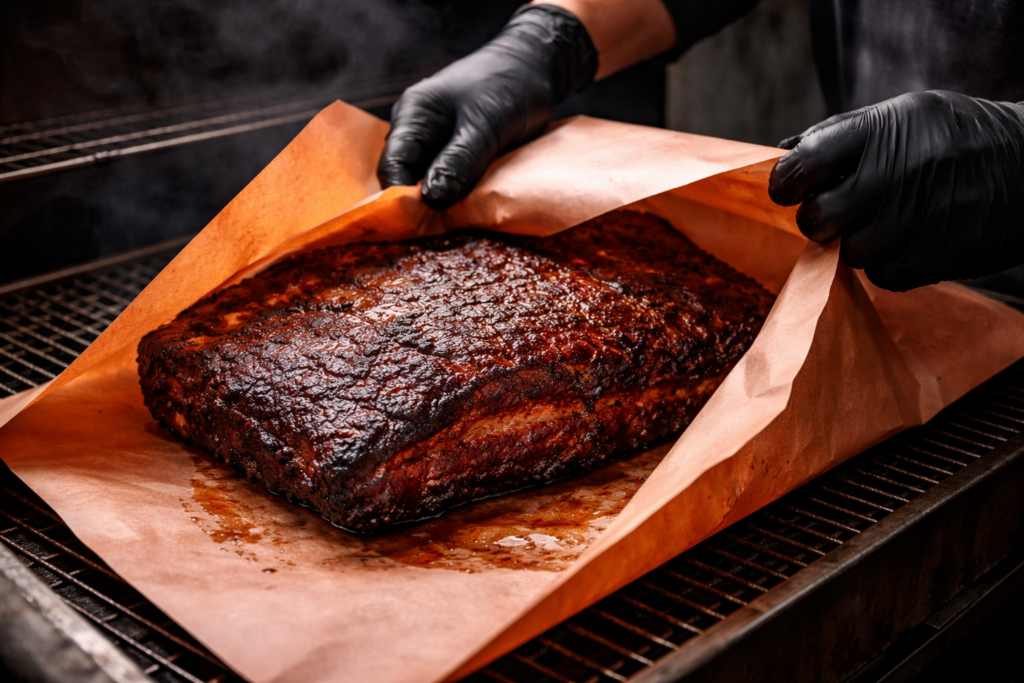
- The bark is dark and firm
- The rub isn’t wet or smearing
- The fat has started to render
If you wrap too early, you can ruin bark development.
If you wrap too late, you extend the cook unnecessarily.
Should You Use Butcher Paper or Foil?
Both work — but they produce slightly different results.
Butcher Paper
- Preserves bark better
- Allows some airflow
- Produces a firmer exterior
Foil
- Cooks faster
- Traps more moisture
- Softens bark slightly
For pellet grills, butcher paper is usually preferred because pellet grills don’t produce heavy smoke like offset smokers. Preserving bark is important.
If you’re short on time, foil will speed things up.
Do You Have to Wrap Brisket?
No.
Some pitmasters use the “no-wrap” method for maximum bark.
However:
- Cook time increases
- Risk of drying out increases
- Timing becomes less predictable
On pellet grills, wrapping helps maintain moisture and creates more consistent results.
For most backyard cooks, wrapping is the safer choice.
How Wrapping Affects Bark
Wrapping softens bark slightly because it traps steam.
To protect bark:
- Wait until bark is fully formed
- Use butcher paper instead of foil
- Keep smoker temperature steady at 250°F — if you’re debating 225 vs 250 for Brisket, here’s how they compare.
If bark is your priority, timing the wrap correctly matters more than the material you use.
What Temperature Is Brisket Done?
Wrapping doesn’t determine doneness — tenderness does.
Brisket is typically done between:
195°F–205°F internal temperature
More importantly, it should feel probe tender — like sliding a thermometer into soft butter.
Always rest your brisket at least 1 hour before slicing.
Final Recommendation
If you’re smoking brisket on a pellet grill:
- Smoke at 250°F
- Wrap at 165–175°F
- Cook until probe tender around 200°F
- Rest for at least 1 hour
Wrapping makes the cook more predictable and helps maintain moisture without sacrificing tenderness.
For consistent backyard results, it’s the smart move.
Brisket Quick Answers
Does wrapping brisket make it cook faster?
Yes. Wrapping pushes the brisket through the stall and reduces overall cook time.
Can you wrap brisket too early?
Yes. Wrapping before bark sets can result in soft, underdeveloped bark.
Is wrapping required on a pellet grill?
No, but it improves moisture retention and timing consistency.