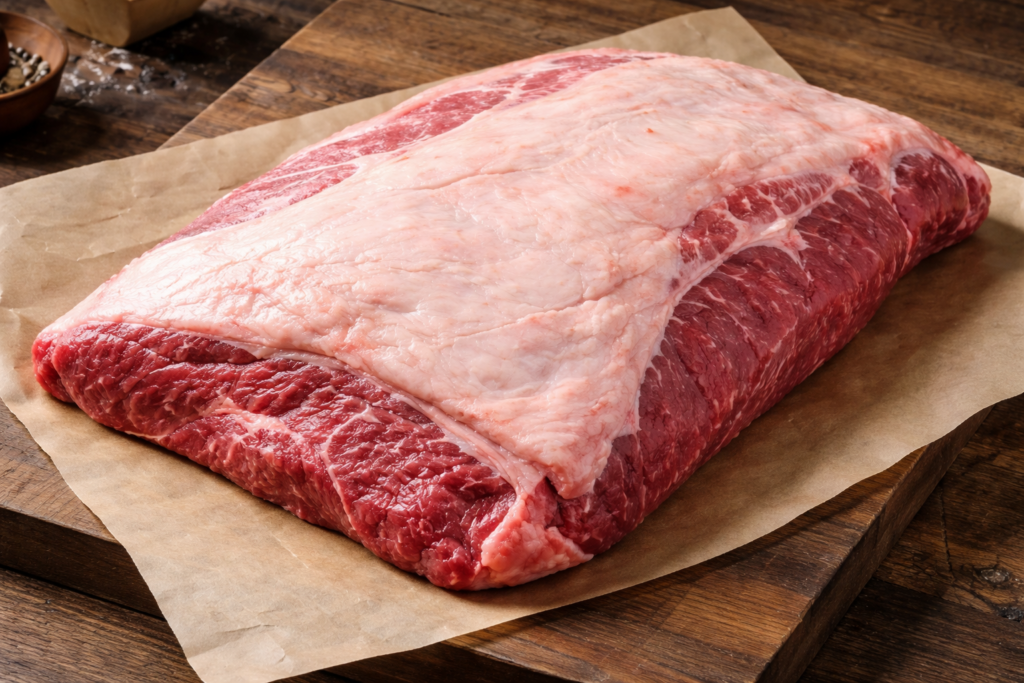
One of the most debated topics in barbecue is whether to smoke brisket fat side up or fat side down.
So what’s the right answer?
If you’re using a pellet grill, cook brisket fat side down.
Here’s why — and when you might do the opposite.
Should Brisket Be Cooked Fat Side Up or Down?
The answer depends on your heat source.
- On pellet grills and smokers with bottom heat, cook fat side down.
- On offset smokers where heat comes from above or the side, fat side up can work well.
Most pellet grills have heat deflectors below the grate, meaning heat rises from underneath.
Placing the fat side down protects the flat — the leanest part of the brisket — from direct heat exposure.
Why Fat Side Down Works Best on Pellet Grills
The flat dries out faster than the point.
When you cook fat side down:
- The fat layer shields the flat
- Heat impact is reduced
- Moisture loss is minimized
- You still get solid bark formation
If you’re cooking at 250°F (which we recommend for most pellet grills), fat side down helps prevent overcooking the bottom of the brisket.
Does Fat Melt Into the Meat?
This is a common myth.
Fat does not soak into the meat as it renders.
Muscle fibers are too dense to absorb melted fat from the top.
Instead, rendered fat:
- Runs off the sides
- Drips into the smoker
- Contributes slightly to surface moisture
Tenderness comes from collagen breakdown — not fat absorption.
If you’re unsure when brisket becomes tender, see our full brisket internal temperature guide.
When Should You Cook Fat Side Up?
There are situations where fat side up makes sense:
- Offset smokers with heat rolling over the top
- When heat source is primarily above the meat
- If you want slightly softer bark on top
In those setups, fat can help shield the surface from radiant heat.
But on pellet grills, that benefit is minimal.
What About Wrapping?
Once you wrap brisket (typically around 165–175°F), fat orientation matters less.
After wrapping:
- The meat is protected
- Heat exposure evens out
- Tenderness depends on internal temperature
If you’re not sure when to wrap, see our guide on when to wrap brisket on a pellet grill.
Does Fat Side Affect Bark?
Yes — slightly.
Cooking fat side down:
- Promotes firmer bark on top
- Protects the underside
- Creates more consistent texture
Cooking fat side up:
- Can soften top bark slightly as fat renders
For bark lovers using pellet grills, fat side down usually produces better results.
Final Recommendation
If you’re smoking brisket on a pellet grill:
- Trim fat cap to about ¼ inch
- Cook fat side down
- Smoke at 250°F
- Wrap when bark is set
- Cook until probe tender (around 195–205°F)
Fat side down provides better protection, more even cooking, and reliable results for backyard pellet grill cooks.
Quick Answers
Does fat side up make brisket juicier?
No. Juiciness comes from proper cooking and resting, not fat placement.
Should you flip brisket during cooking?
No. Leave it in one position the entire cook.
Is fat side down always best?
On pellet grills, yes. On offsets, it depends on heat direction.