
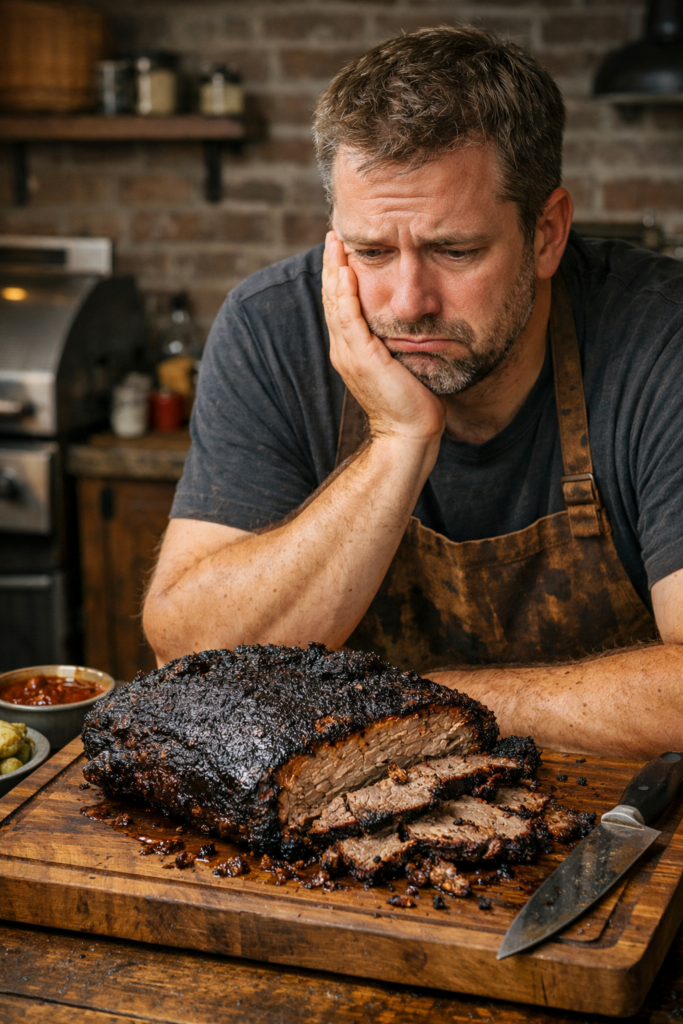
Few things are more frustrating than slicing into a brisket after 10+ hours… only to find it tough and chewy.
So why is your brisket tough?
Brisket is tough when it hasn’t cooked long enough for the collagen to fully break down.
Undercooking is the #1 reason brisket turns out chewy.
Here’s how to diagnose exactly what went wrong — and how to fix it next time.
1. You Pulled It Too Early
This is the most common mistake.
Brisket isn’t done at a specific number — it’s done when it’s probe tender.
Most briskets finish between:
195°F–205°F internal temperature
But temperature is just a guideline.
If you pull it at:
- 185°F → It will be tough
- 190°F → Still likely tight
- Before probe tender → Under-rendered
If you’re unsure what internal temperature to aim for, see our full brisket internal temperature guide.
2. You Didn’t Let It Rest Long Enough
Even if brisket reaches 200°F, slicing too early can make it seem tough.
Resting allows:
- Juices to redistribute
- Muscle fibers to relax
- Carryover cooking to finish collagen breakdown
Minimum rest time:
1 hour
Ideal rest time:
2–4 hours in a cooler or warm oven
Skipping the rest ruins texture.
3. You Cooked at Too Low a Temperature
Cooking at 225°F can work — but it increases stall time and extends the cook.
Longer cooks can dry the flat before collagen fully breaks down.
Many backyard cooks get more consistent results at:
250°F
If you’re debating temperatures, see our breakdown of 225 vs 250 for brisket.
4. You Didn’t Wrap During the Stall
During the stall (around 150–170°F), moisture evaporates and temperature stops rising.
If you don’t wrap:
- Cook time increases
- Surface moisture drops
- The flat can dry out
Wrapping around 165–175°F helps push through the stall and maintain tenderness.
If you’re unsure when to wrap, read our guide on when to wrap brisket on a pellet grill.
5. You Sliced It Wrong
Even a perfectly cooked brisket can seem tough if sliced incorrectly.
Always:
- Slice against the grain
- Separate the flat and point before slicing
- Use a long, sharp slicing knife
Cutting with the grain makes meat chewy.
6. The Flat Was Overexposed to Heat
On pellet grills, heat comes from below.
If you cooked fat side up:
- The flat may have dried out
- Bottom heat may have tightened the meat
For pellet grills, fat side down usually protects the flat better.
Learn more in our guide on fat side up or down when smoking brisket.
How to Fix a Tough Brisket After Cooking
If it’s already sliced and tough:
Option 1: Slice Thinner
Thinner slices feel more tender.
Option 2: Add Moisture
Brush slices with warm beef broth and cover loosely with foil.
Option 3: Return to Heat
If the brisket is still whole and undercooked:
- Rewrap
- Return to smoker at 250°F
- Cook until probe tender
Undercooked brisket can often be saved.
Overcooked brisket is harder to fix.
Final Recommendation for Tender Brisket
For reliable results:
- Smoke at 250°F
- Wrap at 165–175°F
- Cook until probe tender (usually 195–205°F)
- Rest at least 1 hour
- Slice against the grain
Most tough brisket problems come from impatience.
Don’t cook to a number.
Cook to tenderness.
Quick Answers
Why was my brisket tough at 190°F?
Because collagen likely hadn’t fully broken down yet.
Can brisket become tender after 205°F?
Yes, as long as it hasn’t dried out. Tenderness matters more than the number.
Is tough brisket always undercooked?
Most of the time, yes. Chewy brisket is usually under-rendered, not overcooked.